
Quick answer
Courier and delivery businesses can borrow $20,000 to $50,000 quickly against property or a vehicle owned outright, up to 50% of the vehicle's sale value. No cash flow evidence is needed, so a quiet fortnight or a late payment from a contractor does not stop the application.
Key points
- Loans of $20,000 to $50,000, funded in as little as 24 hours once approved.
- A van or truck owned outright can secure up to 50% of its sale value.
- No bank statements or cash flow evidence.
- Prepaid interest first, then weekly repayments.
- Security
- Property, or a vehicle owned outright
- Vehicle limit
- Up to 50% of sale value
- Loan size
- $20,000 to $50,000
- Speed
- As little as 24 hours once approved
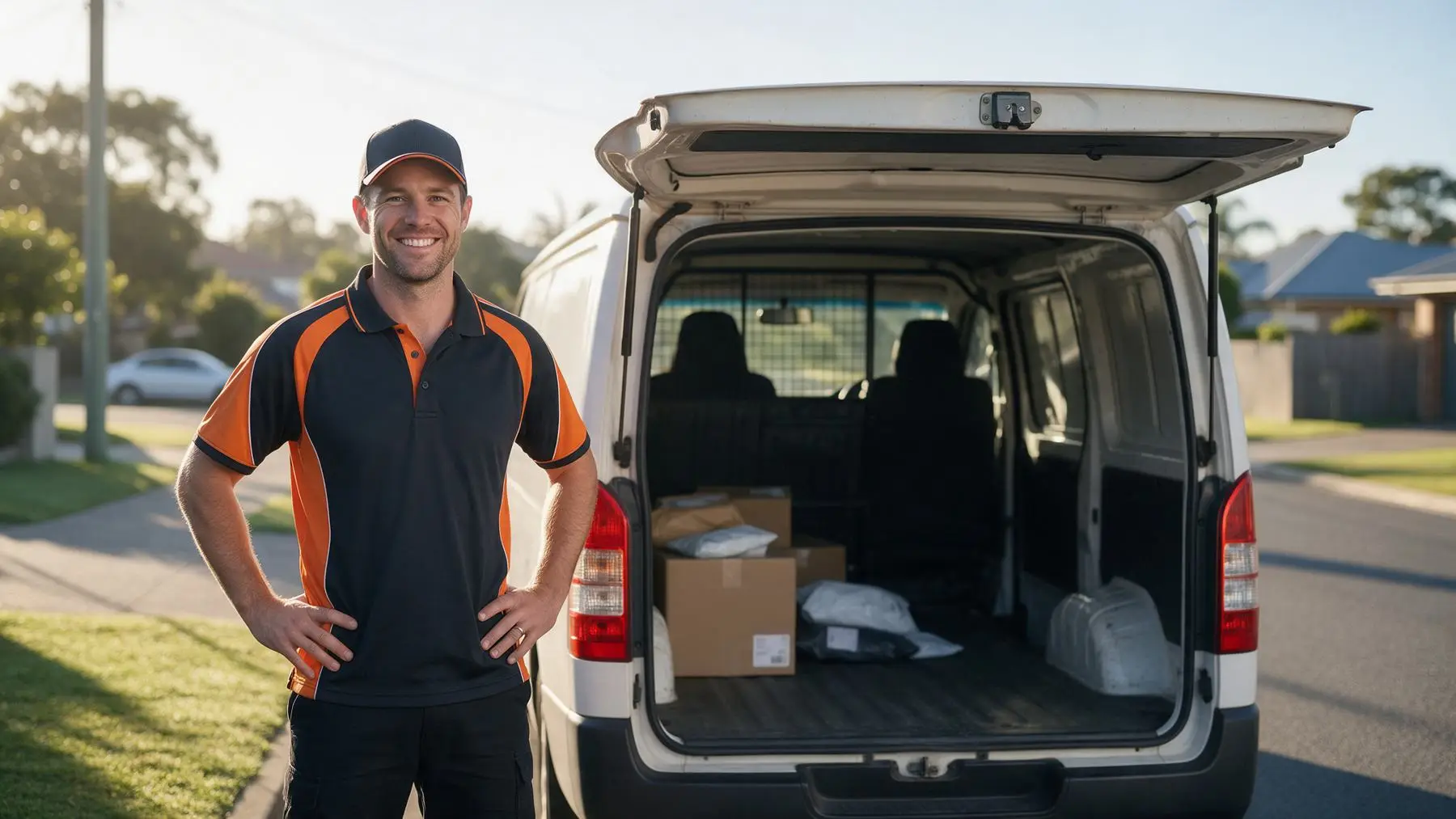
A courier business runs on one asset: a vehicle that moves. When it works, money comes in. When it does not, everything stops, including the income that would have paid for the repair. That is why courier and delivery owners often need money fast, and why a slow, paperwork-heavy lender is no use.
The courier cash squeeze
Most courier and delivery work is paid in arrears. A depot or platform might pay thirty or sixty days after the job, while fuel, tolls, insurance, registration and driver wages are due this week. Add a gearbox failure, a run of unpaid invoices or a sudden contract loss, and a business that looks healthy over twelve months can look weak over three.
Cash flow lenders read that dip as risk. They look at the last ninety days of deposits, see the gap and decline. A loan secured on property or a vehicle you own outright reads differently: it looks at the asset, not the dip.
What a courier loan can pay for
- A replacement or second vehicle. Keep a contract by having a van on the road when the first one is off it.
- Major repairs. An engine, transmission or refrigeration unit that has to be fixed now.
- Fuel and tolls through a slow month. Bridging the gap while invoices are outstanding.
- Driver wages and super. Paying people on time keeps good drivers.
- Registration, insurance and ATO bills. Large lumpy costs that fall due together.
- Paying out other loans. Wrapping up several small cash flow loans into one weekly repayment.
Using a vehicle you own outright
If the company owns a van or truck with nothing owing, it can be offered as security. We lend up to 50% of the vehicle’s sale value, because vehicles lose value and take longer to sell than property. A van that would sell for $60,000 could support up to $30,000. Two vehicles, or a vehicle plus property, can combine toward the $50,000 ceiling. Our vehicle-secured loan page has the detail.
If you own a home or commercial property instead, we lend up to 80% of residential value or 70% of commercial value, with no formal valuation.
A worked example
A two-van courier company is owed $41,000 across three depots, all on sixty day terms. One van needs a $9,000 transmission repair, and the company has $6,500 of fuel, toll and wage bills due this fortnight. The director owns a van outright, valued at about $55,000, and a home with healthy equity. The $25,000 secured advance covers the repair and the fortnight, and prepaying up to three months of interest means nothing is debited while the invoices are collected. The weekly repayments then start from cash flow. Illustration only: nothing in this example is an offer.
How repayments fit a courier week
Courier income is usually weekly or fortnightly, so weekly repayments suit. The opening stretch of up to three months is covered by prepaid interest, and weekly repayments take over afterwards. Line the first debit up with the day your largest depot pays, and keep a small buffer for a missed run. Our page on prepaid interest and weekly repayments explains the structure, and you should compare total costs and early repayment terms before signing.
Protecting the business when a contract changes
Courier work can move quickly. A depot reroutes its runs, a platform changes its rates or a major customer takes delivery in-house. Owners who have borrowed against property rather than a single contract are better placed to ride that out, because the loan does not depend on the contract continuing. Keep two or three sources of work where you can, track every outstanding invoice by due date and chase the day after it falls due. Fuel cards, toll accounts and telematics subscriptions can also be reviewed for savings, and a simple weekly forecast shows a gap three weeks before it arrives.
Questions to ask yourself first
Is the problem a timing gap or a permanent loss of work? If it is timing, a short loan is a sensible bridge. If work has gone for good, borrowing only postpones the conversation, and an accountant can help you plan.
Before you apply
Know your amount, the vehicle’s make, model, year and kilometres, and what you will offer as security. Have your ABN and ACN ready. If any finance sits on the vehicle, say so at the start. The application form takes a few minutes, and a person will call you.
Read the contract carefully and compare total costs. ASIC explains the protections available to small businesses. This is a general guide. A loan is subject to assessment and is not offered here.
Frequently asked questions
Can a van I own outright secure a loan?
Yes. A company vehicle with nothing owing can support a loan of up to 50% of its sale value, within our $20,000 to $50,000 range.
What if my contract pays on 30 or 60 day terms?
That is the classic courier squeeze. A short loan covers fuel, tolls and wages until the invoice is paid. Plan the repayment around the expected payment date.
Do you need my run sheets or bank statements?
No. We do not ask for evidence of cash flow on loans up to $50,000.
Can I borrow if I am an owner-driver with an ABN?
Our loans are for companies. If you trade as a sole trader, ask us what is possible before applying.
What if I need to replace a vehicle that has just failed?
Tell us the deadline. A quick secured loan can cover a replacement or major repair while you stay on the road.